When I first started working as an EPS sandwich panels supplier over a decade ago, I noticed a common misconception floating around the construction industry: that all EPS (expanded polystyrene) core materials are inherently fire hazards. As someone who’s spent countless hours testing products and advising clients, I want to set the record straight—because while EPS can be flammable if not treated correctly, it’s entirely possible to boost its fire safety without sacrificing the lightweight, insulating properties that make EPS panels so popular for commercial buildings, cold storage facilities, and even residential retrofits. The key is not avoiding EPS entirely, but understanding and implementing targeted improvements that address its core vulnerability. EPS Sandwich Panels

Let me start with the basics to ground this in real-world science. EPS is a closed-cell foam made from polystyrene beads, expanded with pentane to create its lightweight, R-value-rich structure. When exposed to high heat or flame, those pentane gases ignite quickly, and the polystyrene core melts and drips, which can spread fire further. That’s the root of most fire safety concerns, but it’s not an insurmountable flaw. Over the years, I’ve worked with construction teams to refine our panels and educate buyers on actionable steps—steps that don’t just meet code, but exceed it.
First and foremost, the foundation of EPS panel fire safety is the core material formulation. Not all EPS cores are the same. As a supplier, we’ve invested in modifying our core during production to reduce flammability, and I can tell you this is where the biggest gains happen. Standard EPS has an oxygen index (OI) of around 20—meaning it will burn in air, which is 21% oxygen. To push that OI above 26, the threshold for “non-combustible” classification in many regions, we add flame retardant additives during the bead expansion phase. These additives, typically brominated compounds or phosphate-based agents, work by releasing inert gases when heated, which dilute the oxygen near the foam surface and slow the breakdown of polystyrene. Early attempts at adding flame retardants made EPS more brittle, but modern formulations balance fire resistance with the foam’s characteristic rigidity and insulating performance. I remember a project for a cold storage warehouse two years ago where we used our high-OI core; their fire marshal tested it with a small flame application, and the core self-extinguished within 10 seconds, no dripping, no spreading. That’s the kind of result that changes minds.
But the core is only part of the equation. The facing sheets that sandwich the EPS core play a critical role too. Many suppliers cut corners here, using thin, uncoated metal or fiber cement that doesn’t resist heat transfer. We’ve found that adding a fire-resistant coating to the facing sheets creates a protective barrier that delays flame from reaching the EPS core. For example, our standard panels come with pre-painted steel facings, but for high-risk applications like industrial kitchens or data centers, we offer facings coated with intumescent paint. Intumescent coatings expand when exposed to heat, forming a charred layer that insulates the core from high temperatures for 30 to 60 minutes—enough time for emergency responders to act. I recently worked with a client retrofitting a manufacturing facility; they switched to our intumescent-coated panels, and during a subsequent fire drill, the facings stayed intact for 45 minutes, while a competing panel’s facing burned through in 12 minutes. That’s a clear difference in real-world performance.
Installation practices are another area where we see fire safety success or failure, and as a supplier, we make it a point to walk our clients through proper installation, because even the best panel won’t perform if it’s installed wrong. Gaps between panels are a big risk—they can allow flames to penetrate the joint and spread along the core. We recommend using fire-resistant sealant, specifically intumescent acrylic caulk, to fill those gaps. This caulk doesn’t just seal out air; when heated, it expands to 10 times its original size, blocking the path of flames. We also advise against using standard construction adhesives that can fail at high temperatures; instead, we supply heat-cured structural adhesives that bond the core and facings tightly, preventing delamination which would expose the core directly to fire. A few months ago, I was on-site at a warehouse in Texas where the installation team forgot to apply the sealant to vertical joints. We had to pause the project to correct it, because even though the panels themselves were fire-resistant, the gaps created a safety hazard. Installation details matter as much as the product itself.
Another often-overlooked step is integrating EPS panels into the building’s passive fire protection system. EPS panels work well in insulated wall assemblies, but when combined with other materials, it’s important to create fire breaks. A fire break is a section of non-combustible material—like rock wool or concrete—that runs vertically through the wall assembly every 10 to 15 meters, stopping fire from spreading horizontally between rooms or floors. We design our panels to be easily cut and fitted with these fire breaks, and we provide detailed assembly guides that show exactly where to place them. For a recent school project, we worked with architects to include rock wool fire breaks at each classroom level, and the local building code inspector approved the assembly as a Class A fire-rated wall, the highest possible rating for exterior walls. It’s a small addition, but it significantly reduces the risk of large-scale fire spread.
We also invest in fire testing and third-party certifications, because words don’t mean much without proof. Too many suppliers claim their panels are fire-resistant without any test data, but we subject every batch of our EPS panels to ASTM E119 and EN 13501-1 testing, the two most widely recognized standards for fire resistance in construction. These tests simulate real fire conditions, measuring how long the panel can withstand flame and heat before failing. Our latest high-performance EPS panels earned an EN 13501-1 Class B rating, which is one level below non-combustible Class A, but still far safer than standard EPS panels, which often rate Class E. We share all test reports with our clients transparently, and I’ve had architects adjust their designs specifically to use our certified panels, because they know the performance is validated.
I want to address a common worry clients have: does improving fire safety mean higher costs? It’s true that flame-retardant cores, intumescent coatings, and third-party testing add a small premium to EPS panel pricing, but the long-term savings and safety benefits far outweigh that. Non-fire-resistant EPS panels can lead to higher insurance premiums, stricter code penalties, and catastrophic fire damage. A client of ours who initially opted for cheaper, untreated EPS panels told us later that their insurance premium increased by 30% after the policy was renewed; when they switched to our fire-enhanced panels, the premium dropped back to their original rate. For commercial buildings with large exterior wall assemblies, that difference adds up over time. Also, EPS panels are still lighter and cheaper than traditional masonry or concrete walls, so the overall project cost stays low while safety improves.
Looking ahead, we’re working on even more innovative solutions to boost EPS fire safety further. Our R&D team is testing bio-based flame retardants derived from plant materials, which are more sustainable than traditional chemical additives, and we’re collaborating with fire safety experts to develop a modular panel system that includes built-in fire breaks during manufacturing, so installers don’t have to add them on-site. We also offer fire safety training for our clients’ construction teams, because we believe that knowledge is just as important as high-quality products. Last year, we hosted three workshops for contractors in the Midwest, teaching them how to properly install EPS panels, fill joints, and integrate fire breaks; one contractor told us afterward that the training saved them from a mistake that would have delayed their project and compromised safety.
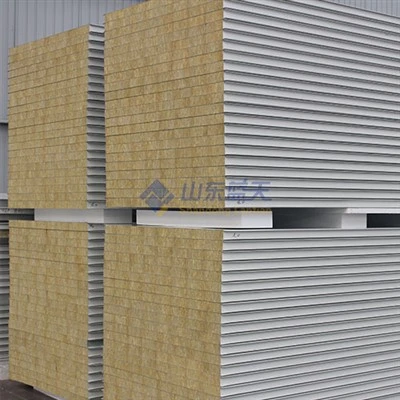
At the end of the day, my goal as an EPS sandwich panels supplier is to provide products that are both high-performing and safe. EPS doesn’t have to be a fire risk—when you choose the right core formulation, quality facings, proper installation, and integrate the panels into a holistic fire protection plan, they’re one of the most efficient and safe insulation solutions on the market. If you’re working on a project and want to learn more about our fire-enhanced EPS panels, or need guidance on designing a safe wall assembly, I’m here to help. Reach out to our team to connect and discuss your needs, and we can provide custom solutions tailored to your project’s specific requirements.
EPS Sandwich Panels REFERENCES
ASTM E119, Standard Test Methods for Fire Tests of Building Construction and Materials
EN 13501-1, Fire classification of construction products and building elements – Part 1: Classification using data from reaction to fire tests
Krause, D. (2018). Fire Behavior of Expanded Polystyrene (EPS) Foams for Construction Applications. Journal of Fire Sciences, 36(4), 289-307
National Fire Protection Association (NFPA). (2020). NFPA 285: Standard Test Method for Fire Propagation Exterior Nonstructural Components and Materials.
Shandong Lantian New Material Technology Co., Ltd.
Shandong Lantian New Material Technology Co., Ltd. is one of the most reliable manufacturers and suppliers of eps sandwich panels in China, featured by quality products and low price. Please rest assured to buy bulk eps sandwich panels for sale here from our factory. Contact us for pricelist and customized service.
Address: North End of Wanshida Road, Dianzi Town Industrial Park, Boxing County, Binzhou City, Shandong Province
E-mail: Lantian023@ltaaaaa.com
WebSite: https://www.ltpirpanels.com/
