If you’ve ever walked through a commercial building, a manufacturing facility, or even a large residential complex, you’ve probably glanced at a distribution panelboard—those matte gray metal boxes bolted to walls, lined with circuit breakers and neatly labeled wires that keep lights on, machinery running, and appliances safe. As someone who’s supplied distribution panelboards for over 12 years, I’ve seen firsthand how often facilities teams cut corners on the training their staff need to work with these systems safely and effectively. A panelboard isn’t just a metal box with switches; it’s the central nervous system of electrical distribution, and mismanaging it can lead to costly downtime, fire hazards, or even serious injury. That’s why today, I want to break down exactly what training’s required to operate and maintain these critical pieces of equipment, straight from the supplier who’s installed, serviced, and supplied panelboards for hundreds of sites across North America. Distribution Panelboards
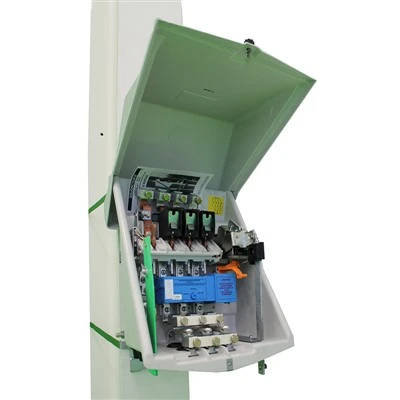
First, let’s start with the basics: what even is a distribution panelboard? For anyone not in the electrical trade, it’s a component that takes high-voltage power from the main service entrance and splits it into smaller, manageable circuits that feed specific areas or pieces of equipment. Unlike switchboards (which handle larger power loads) or load centers (smaller units for homes), panelboards are the workhorses of mid-sized applications—think office buildings, grocery stores, or assembly lines. But their simplicity is deceptive: a typical commercial panelboard might hold 20 to 40 breakers, each with a specific amperage rating, and even minor errors here can cascade into major issues.
Now, the first non-negotiable training tier every operator needs is foundational electrical safety and general panelboard operation. This isn’t a niche course; it’s the baseline for anyone who will so much as open a panelboard door, let alone flip a breaker or add a circuit. The key here is understanding what’s called “limited approach boundaries” for electrical work, per standards like NFPA 70E—the National Fire Protection Association’s Standard for Electrical Safety in the Workplace, which is the gold standard for this kind of training. For unqualified staff (like facility managers who only need to toggle breakers during outages), the rule is simple: they can only work on a panelboard if it’s fully de-energized, and they must stand at least three feet away from any exposed live parts. But even qualified staff (electricians or trained maintenance techs) need to master the basics before touching a breaker. That means learning to verify the panel’s voltage with a properly rated multimeter, how to correctly label circuits to avoid mis-toggling, and how to identify common warning signs on a panelboard: discolored breaker handles, frayed wire insulation inside the box, or breakers that trip repeatedly without an obvious overload. Last year, we supplied a 30-circuit panelboard to a small manufacturing plant, and a trainee there skipped this training—he flipped a breaker without labeling it, knocked out power to the entire packaging line, and cost the company $18,000 in lost production in a single shift. Stories like that are why this foundational training isn’t optional.
Next up is hands-on maintenance training, which is split into two levels: routine, scheduled maintenance and emergency troubleshooting. Routine maintenance for distribution panelboards is required at least once every 12 months for commercial and industrial sites, and more frequently for high-use environments like food processing plants or data centers. What does this training cover? For starters, how to perform a visual inspection of the panel’s interior without energizing it first—checking for corrosion on bus bars (the metal strips that carry power), loose terminal screws on breakers, and buildup of dust or debris inside the box (which can cause short circuits). Then there’s the annual thermal scan training: using an infrared camera to detect hot spots on breakers or bus connections, a common early sign of overheating that leads to fires. We recently taught a maintenance team at a chain of grocery stores how to do these thermal scans independently; before that, they were hiring outside electricians every year, at a cost of $2,500 per store. Now, their in-house techs can do the same scan in 20 minutes per panel, saving the chain over $30,000 annually. That’s the kind of value good training delivers.
Emergency troubleshooting training, on the other hand, is for when a breaker won’t reset, a circuit trips unexpectedly, or a panel shows signs of overheating. This training has to be specific to the type of panelboard a facility uses, too—because not all panelboards are the same. For example, a molded-case circuit breaker panel (the most common for commercial sites) has different reset procedures and fault protocols than a panel with ground-fault circuit interrupter (GFCI) breakers, which are required in wet areas like break rooms or restrooms. Our team doesn’t just sell panelboards and walk away; we provide custom troubleshooting guides for every product we supply, and we require that maintenance staff complete a hands-on session with these guides before operating the panel. That means practicing how to disconnect a faulty breaker without disturbing the surrounding circuits, how to test a ground fault circuit, and when to call a licensed electrician instead of attempting a repair. Last quarter, a facility manager told us that after taking our troubleshooting training, his team fixed a tripped circuit that was causing their office’s AC to fail—they avoided a $5,000 service call by using the skills we’d taught them. It’s small wins like that that make the investment in training worth it.
Now, let’s talk about the more specialized training requirements for staff who work with higher-capacity distribution panelboards—think 400-amp or 800-amp units, which are common for large warehouses or multi-story office buildings. These panels carry more power, so the risks are higher, and the training required is more detailed. For these panels, staff need to be trained in arc flash safety, a critical component often overlooked in basic electrical training. An arc flash is a sudden release of energy from an electrical fault that can reach temperatures of 35,000 degrees Fahrenheit—hotter than the surface of the sun—and it’s responsible for 10% of all workplace electrical injuries, according to the Electrical Safety Foundation International (ESFI). Training for high-capacity panels covers calculating arc flash boundaries for the specific panel model (something we can help with as suppliers, since we provide the electrical load data for every panel we sell), selecting and wearing proper personal protective equipment (PPE) like arc-rated clothing, face shields, and rubber gloves, and how to shut down the panel safely during an arc flash emergency. We also train staff on lockout/tagout (LOTO) procedures, which are OSHA (Occupational Safety and Health Administration) mandatory for any work on energized equipment. LOTO means locking the panel’s main breaker in the “off” position and attaching a tag with the technician’s name, so no one can accidentally re-energize the panel while work is being done. Without LOTO training, even a simple maintenance task can turn dangerous.
It’s also important to note that training isn’t a one-time event. Industry standards update regularly—NFPA 70E revised its arc flash guidelines in 2021, for example, and OSHA updates LOTO requirements every few years—so staff need annual refreshers. As a supplier, we don’t just provide initial training when a customer buys a panelboard; we offer free annual refreshers for anyone who uses our products, to make sure their team stays up to date. We’ve seen too many facilities where staff learned the basics 5 years ago, then missed a new standard that could have prevented an injury. A few years back, a customer of ours had an arc flash incident on a 600-amp panel because his maintenance team was still using 2015-era PPE, which didn’t meet the 2018 NFPA standards. The team had to shut down the panel for 3 days, costing the company over $100,000 in lost production, and two staff members suffered minor burns. That’s a cost that could have been avoided with regular, updated training.
Now, let’s address a common misconception among facility managers: they often think “electrical work is for electricians, so our general maintenance staff doesn’t need training on panelboards.” That’s simply not true. General maintenance teams are often the first to respond to a tripped breaker, a flickering light, or a panel that’s making strange noises, and if they don’t have the right training, they can make a small problem much worse. For example, a maintenance tech without training might force a tripped breaker to reset, which could cause a wire to overheat and start a fire—something that’s happened in over 7,000 residential and commercial fires annually in the U.S. since 2020, per the U.S. Fire Administration. Our team always tells customers: even if you only have one licensed electrician on staff, training your entire maintenance team on basic panelboard operation can prevent small issues from becoming emergencies.
So, what are the steps to make sure your team is properly trained? First, start with verifying that any training program you use is aligned with NFPA 70E, OSHA, and ESFI standards. Avoid online-only courses for hands-on work—panelboard operation is a physical skill, and trainees need to practice with actual panel units, not just simulations. Second, tie your training to the specific panelboards you use. As a supplier, we have technicians who can come to your site and lead hands-on training with the exact panels you’ve installed, which is far more effective than generic training. Third, schedule regular refreshers—we recommend every 12 months for high-use facilities, every 2 years for low-residential or small commercial sites.
If you’re a facility manager, maintenance director, or even an electrician looking to make sure your team has the skills to operate and maintain distribution panelboards safely, the next step is to connect with experts who know these systems inside and out. As a panelboard supplier with decades of experience, we don’t just provide equipment—we provide the training and support your team needs to keep your electrical systems running smoothly, safely, and cost-effectively. Whether you’re outfitting a new building, upgrading existing panels, or just looking to refresh your team’s skills, we’re here to help you navigate the training requirements, avoid costly mistakes, and keep your team safe. Don’t wait for an incident to happen—reach out to us to discuss your specific needs, and let’s make sure your panelboard training meets all industry standards and works for your facility.
Air Circuit Breakers References
National Fire Protection Association. NFPA 70E: Standard for Electrical Safety in the Workplace. 2024 Edition.
Electrical Safety Foundation International. Arc Flash Safety Guidelines for Commercial and Industrial Facilities. 2023.
Occupational Safety and Health Administration. 29 CFR 1910 Subpart S: Electrical Safety Standards.
U.S. Fire Administration. Electrical Fires in Commercial Buildings: 2018-2022 Data Summary. 2024.
Wenzhou Lanen Electrical Co., Ltd.
Wenzhou Lanen Electrical Co., Ltd. is one of the most professional distribution panelboards manufacturers and suppliers in China, also supports customized service with low price. Please feel free to buy CE approved distribution panelboards made in China here from our factory. Contact us for more discount information.
Address: Zhiguang Liushi Town Yueqing City Wenzhou City Zhejiang Province
E-mail: lanen@luyele.cn
WebSite: https://www.lanenelectrical.com/
