If you’re a sheep farmer or manager investing in a sheep handling system, you already know that even the most well-built setup won’t deliver on its promise of reduced stress, safer handling, and streamlined workflows if it’s misaligned. For nearly a decade, my team and I have supplied sheep handling systems to producers across North America—working side-by-side with ranch hands, flock managers, and small-scale family farmers—and the number one issue we troubleshoot after installations (and even years down the line) is alignment. It’s not just a “setup detail”; it’s the backbone of how your flock interacts with your system. Misaligned gates, raceways, and sorting chutes can turn a routine vaccination or lamb marking session into a chaotic, stressful event for both you and your sheep, leading to lost time, unnecessary injuries, and even avoidable health risks for your flock. Sheep Handling System

Today, I want to walk you through the actionable, science-backed steps we teach every customer to check their system’s alignment—plus the small tweaks that make a world of difference. This isn’t about guessing or eyeballing; it’s about using simple, reliable methods that account for sheep’s natural behavior, because sheep are creatures of consistency. They don’t react well to sudden shifts in direction or uneven gaps, so your system’s alignment has to work with their instincts, not against them.
Start With the Big Picture: Walk the Entire System From Start to Finish
Before you grab any tools, take five minutes to walk your entire sheep handling system from the first entry point (your crowding pen) all the way through the raceway, sorting chutes, and out to the processing pen (where you’ll weigh, vaccinate, or process sheep). This is our first step on every service call, and it’s where we catch the most obvious alignment issues before we even measure anything.
Sheep move best when there’s a clear, unobstructed visual line forward—think of it like a gentle funnel that narrows gradually, not a tight turn or a gap that disappears suddenly. As you walk, ask yourself: Does every section flow smoothly into the next? If you have to make a sharp left or right turn, is that turn framed so it guides the sheep’s shoulder gently, so they don’t feel like they’re being pushed into a corner? Also, check for gaps or overlaps between panels. Even a 2-inch gap between two raceway panels might not seem like much to you, but to a sheep, that’s a confusing, high-stakes opening that can make them stop, hesitate, or even try to bolt through.
Last year, a 300-ewe operation in Iowa called us because their sorting chutes were causing 10+ sheep to escape during each sorting session. When we walked their system, we found their crowding pen gate was misaligned with the raceway entry—there was a 3-inch gap, and the first 10 feet of raceway veered 15 degrees to the left, right where a sharp turn should only be 5 degrees maximum. Once we realigned that gate and adjusted the raceway to a smooth, 4-degree curve, their escape rate dropped to less than one per session. That’s the power of starting with the big picture: small visual inconsistencies derail the whole system.
Measure Critical Alignment Points With Simple Tools (No Fancy Equipment Needed)
Once you’ve done the walkthrough, it’s time to get specific measurements. You don’t need a laser level or construction-grade tools—most of what we use is already in your shop, plus a few basics we supply with every system we sell. The key sections to check are the crowding pen, raceway, sorting chute, and palpation cage (if you have one attached).
1. Crowding Pen Alignment: Gate to Raceway Entry
The crowding pen’s job is to gently push sheep into the raceway without crowding them so much they panic. For proper alignment, the center of the crowding pen gate must line exactly with the center of the raceway entry. To check this, take a long tape measure or a piece of string: stretch it across the open crowding pen, from one inner side panel to the other, and mark the midpoint. Do the same for the raceway entry, stretching the string across its width and marking the midpoint. If those two midpoints are more than ½ inch off, that’s a problem. When the gate opens, it will angle toward one side of the raceway, making sheep hesitate instead of moving straight in.
Also, check that the angle between the crowding pen sides and the raceway is 90 degrees. No more—an angle steeper than 90 creates a “pinch point” where sheep get stuck, and an angle too shallow makes the pen feel open and unconfining, so sheep won’t move forward.
2. Raceway Alignment: Straight Sections and Curves
Raceways are where alignment is most critical, because sheep spend the most time here. For straight raceway sections, they should be perfectly level along their entire length, with no more than a ½-inch drop between adjacent panels. Uneven panels make sheep stumble, which stresses them, and even small slopes can cause them to bunch up or refuse to move. To check this, set a 4-foot level across the top of the raceway panel at 10-foot intervals. If the bubble is off by more than 1/32 inch, you’ll need to adjust the panel’s base (using leveling blocks or shims, if your system is mobile; or tightening anchor bolts, if it’s permanent).
For curved raceway sections, stick to the rule of a consistent radius. The standard we recommend for most commercial systems is a 12-foot minimum radius for adult sheep, and 10 feet for lambs. A radius that’s too tight (smaller than 10 feet for lambs, 12 for adults) makes sheep feel trapped, while a radius that’s too wide can make them wander. To check the radius, pick a starting point at the curve’s beginning, measure 12 feet along the edge of the raceway, then mark another point at the curve’s end. The midpoint between those two marks should sit exactly on the curve’s center line—if it’s off, the curve is uneven and sheep won’t flow through smoothly.
We had a small family farm in Nebraska contact us last spring because their lambs would freeze up in the raceway mid-curve, delaying processing for hours. When we measured, their curve had a 7-foot radius in one section, and 14 feet in another—so each lamb tried to adjust to the sudden change, leading to confusion. We reset the curve to a consistent 10-foot radius, and they said their lamb processing time dropped by 40% that season.
3. Sorting Chute and Processing Pen Alignment
Sorting chutes are where you’ll separate sheep by gender, age, or health, so their alignment needs to work with sheep’s natural tendency to follow a visual line. The entry to the sorting chute should line perfectly with the end of the raceway—no more than ¼ inch of shift between the two, so there’s no “gap” that sheep perceive as a dead end.
Inside the sorting chute, the gap between the two side panels should be consistent, 22 to 24 inches wide for adult sheep, and 18 to 20 inches for lambs. A gap that’s too narrow makes sheep get stuck, and a gap that’s too wide lets them twist away. Also, check that the squeeze mechanism (if your system has one) is centered between the chute sides—if it’s off, it’ll pinch sheep on one side, causing them to lash out or refuse to enter the chute.
Finally, the processing pen attached to the sorting chute should open directly into the chute’s exit, with no sharp turns. Sheep expect to move straight after being sorted, so a 90-degree turn here will make them hesitate, even if it’s just a few feet away.
Test With Live Sheep (The Most Accurate Check)
Numbers and measurements are great, but nothing beats testing your alignment with a small group of your own sheep. We always recommend doing a test run with 5 to 10 adult sheep (or lambs, if you’re testing their section) that you’re familiar with. Watch how they move through every part of the system: Do they walk through the raceway without stopping or turning around? Do they enter the sorting chute without hesitation? Do they exit smoothly into the processing pen, no pushing or panicking?
If your test group hesitates at a specific point, that’s where your alignment is off. For example, if they stop right before the raceway curve, measure the radius there again—chances are it’s inconsistent. If they get stuck at the sorting chute entry, recheck the alignment between the raceway and chute entry.
Last year, we had a customer in Ohio who followed all the measurements but still had sheep refusing to use the sorting chute. When we tested, we noticed the light above the chute was casting a shadow right at the entry, making it look like a dark, scary space to sheep (who are averse to shadows). Once we adjusted the light, the issue was fixed—but that’s exactly why testing with live sheep matters: measurements miss small, behavioral cues that only actual sheep will show.
Common Alignment Mistakes We See (And How to Fix Them)
Over the years, we’ve seen the same misalignment mistakes again and again, all easy to fix with a little adjustment:
- Loose anchor bolts on permanent systems: Weather, ground shifting, and regular use can loosen bolts, shifting panels out of alignment every few months. We recommend checking and tightening all anchor bolts (on raceways, crowding pens, and processing pens) every six months.
- Mobile systems not leveled when set up: If your system is portable, it’s easy to drag it into place and call it good. But uneven ground tilts panels, throwing off raceway alignment permanently. Always use shims to level each panel before securing it on mobile setups.
- Uneven gate alignment: Gates that swing unevenly—one side lower than the other—create gaps or pinch points. Adjust gate hinges or latch mechanisms to ensure both sides of the gate meet the frame at the same height, and the gap between the gate and frame is consistent (no more than ½ inch).
Why Proper Alignment Matters For Your Bottom Line
I want to be clear: this isn’t just about making handling easier for you (though it definitely does). Proper alignment reduces sheep stress, which has real, measurable benefits for your operation. Stressed sheep have lower weight gain, weaker immune systems, and higher rates of injury—all of which cut into your profits. A 2022 study from the University of California, Davis, found that properly aligned sheep handling systems reduced processing time per sheep by 35% and cut sheep injury rates during handling by 42%. For a 500-ewe operation, that’s thousands of dollars in saved labor, reduced vet bills, and higher-quality market lambs.
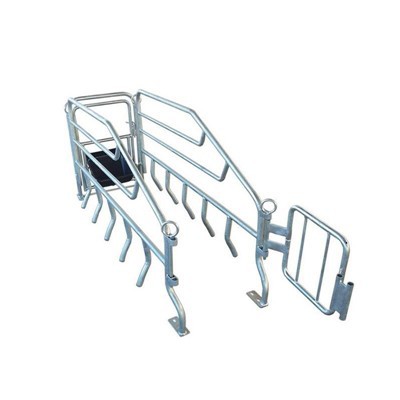
At the end of the day, sheep are predictable, gentle animals when their environment is consistent. Your handling system is an extension of that environment. Misalignment isn’t a flaw in the system’s build—it’s a flaw in how you’re setting it up and maintaining it. The good news is that checking alignment doesn’t have to be hard, time-consuming work. Set aside an hour once every six months to walk through, measure, and test your system, and you’ll see a difference in every handling session.
Sheep Gates If you’re setting up a new sheep handling system, or your current setup is causing more stress than it should, we’re here to help. We supply systems designed with sheep behavior and alignment in mind, and our team is always available to walk you through setup and maintenance, no matter the size of your flock. Don’t let a small alignment issue turn your routine work into a hassle—reach out and let’s get your system working for you, not against you.
References
- Grandin, T. (2015). Livestock Handling and Transport (4th ed.). CAB International.
- University of California, Davis, Department of Animal Science. (2022). Impact of Facility Alignment on Sheep Handling Efficiency and Welfare. Journal of Applied Animal Welfare Science, 25(3), 289–302.
- Shepherd, R. (2021). Practical Sheep Farm Management. Wiley-Blackwell.
Hebei Honde Industrial Trade Imp & Exp Co., Ltd.
With abundant experience, we are one of the most professional sheep handling system manufacturers and suppliers in China. We warmly welcome you to wholesale high quality sheep handling system for sale here from our factory. We also accept customized orders.
Address: Room 1904, Yintai International Building, No.36 Guang’an Street, Shijiazhuang, Hebei, China
E-mail: Helen@hbhonde.com
WebSite: https://www.hondelivestocksupply.com/
