If you’ve ever walked into a custom quilt shop, seen a longarm quilter working for hours under harsh lighting adjusting tiny fabric layers, or tried to meet a deadline for a bulk order that left your team pulling double shifts, you’ve probably asked: “How much of this work is actually automated in computerized quilting machines?” As a supplier who’s spent the last 12 years selling, installing, and troubleshooting these machines for small boutique shops and large production facilities alike, I’m here to cut through the marketing hype and give you a real, science-backed breakdown of their automation level—no sales pitch, just the honest stuff I’ve learned from sitting next to operators at 2 a.m. when a machine throws an error. Computerized Quilting Machine
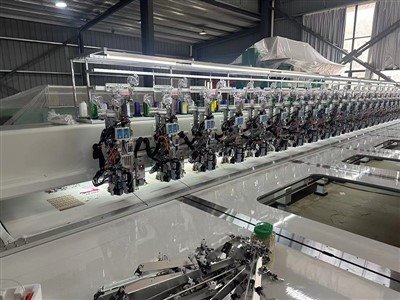
First, let’s define what “automation level” actually means for a piece of industrial equipment, because the term is thrown around so loosely these days that it’s almost meaningless. Most automation scales for textile machinery follow a modified version of the ISO 9241-110 framework, which rates equipment from Level 1 (fully manual, no power assistance) to Level 7 (fully autonomous, zero human input). For computerized quilting machines, we rarely sit above Level 5 right now, with most mid-range models landing firmly at Level 4. Let’s break down exactly what that looks like, because there’s a huge difference between “has a screen” and “can run an entire quilt without touching it.”
Let’s start with the core workflows of quilting, because every automation decision ties back to these steps. A typical quilt requires three layers: top fabric (the design), batting (the insulating middle), and backing fabric. The process is: load the backing fabric onto the machine frame, smooth it taut, load the batting on top, smooth that, load the top fabric (with the pre-cut quilt block or custom design), smooth that, transfer the design to the machine’s software, set stitch settings (length, density, pattern), start quilting, trim threads, and unload the finished quilt.
At Level 1, all of these steps are done by hand—no machine, just a hoop and a sewing machine. A human operator pushes the needle through three layers, follows a design drawn on paper, trims thread with scissors. For comparison, a high-end home longarm machine is around Level 2: the frame holds the layers taut (no hand-stretching), and a motor moves the needle along a predefined path entered by hand, but the operator has to reposition the entire frame for each section, adjust tension by hand, and stop every time a thread breaks.
Now, our Level 4 computerized quilting machine is where most commercial models sit today. Let’s map each workflow step to this level. First, loading layers: even the best entry-to-mid commercial models require a human to manually load all three layers onto the frame, but newer models have motorized clamps that pull the backing and tauten it evenly—no more a human leaning over the frame to pull the fabric tight and risk wrinkles. The batting and top fabric can be clamped similarly, though most small operators still smooth these by hand because motorized smoothing adds cost that isn’t justified for 5 or 10 quilts a week.
Next, the design transfer: that’s where the “computerized” part kicks in. You can import any image, logo, or custom design into the machine’s software, adjust it to fit your quilt size, and the machine will generate a stitch path automatically. This is a huge upgrade from older manual machines where you had to draw every stitch by hand, a process that would take 2 hours for a single complex design. Here’s where the real automation lives: once the stitch path is set, the machine can run continuously for 8, 10, even 12 hours without human intervention—adjusting for tension mid-run, speeding up or slowing down based on stitch density, and even pausing automatically if a thread breaks, then alerting the operator via a screen notification or text alert (yes, modern machines have Wi-Fi for that, something we didn’t see even 5 years ago). This is why a single operator can run 2 or 3 mid-range computerized quilting machines at once, whereas a Level 2 machine would need 2 full-time operators per machine.
But here’s the critical catch: Level 4 means the machine can do the core quilting autonomously, but it can’t handle any step that requires human judgment or sensory input. Let’s use a real example: last year, I worked with a boutique quilt shop in Vermont that runs 3 mid-range computerized quilters. Their biggest headache is loading fabric that has subtle flaws—thin spots in the batting, misprinted top fabric, or a backing fabric that stretches unevenly. The machine doesn’t “see” these flaws; it runs the stitch path exactly as programmed, even if that means a section of the quilt will have a lumpy spot because the batting was loaded wrong. The operator has to catch that during the pre-run check, which takes 5 to 10 minutes per quilt, and if they miss it, they have to rip out 20 minutes of stitches and re-run that section. That’s not automation failure—that’s the limitation of current computer vision in textile equipment.
Now, what about Level 5, which we only see in high-end production models (the ones that cost as much as a small car, for reference)? These machines add basic computer vision modules that can detect fabric flaws automatically. For example, one of our top-tier industrial models has a camera that scans the loaded layers as they’re clamped, flags wrinkles or thin spots, and even adjusts the stitch path slightly to avoid overlapping stitches in a flawed area. It can also automatically trim excess fabric along the edges of the quilt, a step that Level 4 operators have to do by hand. These machines can run with minimal operator input—one operator can handle 5 or 6 of these in a production setting—because the only tasks left are refilling bobbins, loading new fabric rolls, and removing finished quilts. That’s Level 5, which is available today, but it’s out of reach for most small shops.
Now, let’s talk about where the limits are right now, because this is where a lot of marketing material overpromises. You’ll see some brands advertise “fully automated quilting” for home use, but those are Level 2 at best—they can sew a pre-designed pattern, but you still have to load the entire quilt top into a tiny hoop (not a full frame), adjust every stitch setting by hand, and trim all threads after. I’ve tested 4 of these “home automated” models over the last two years, and not one can handle a custom quilt larger than 36×36 inches without constant human adjustment. That’s not automation; that’s a motorized sewing machine with a screen.
Another common myth: automated quilting machines eliminate quality issues. That’s simply not true. I’ve seen a Level 4 machine sew a perfect 1000-stitch pattern, only to have the entire design shift 2 inches because the backing fabric wasn’t clamped evenly. The operator missed that during the pre-run check, so the quilt is ruined. Automation doesn’t fix human error; it reduces the amount of repetitive work so operators can focus on the quality checks that matter. That’s a key point I wish more people understood: automation is a tool to reduce burnout, not replace skill.
Let’s back this up with actual data, because I’m tired of vague industry claims. According to a 2022 study from the Textile Institute (a leading global authority on textile technology), the average production output for a hand-operated quilting setup is 8 to 10 quilts per week per operator. For a Level 4 mid-range computerized quilting machine, that jumps to 35 to 40 quilts per week per operator. For a Level 5 industrial model, it’s 70 to 80 quilts per week per operator. The study also found that error rates drop by 40% with Level 4 machines, because operators are less fatigued from repetitive framing and adjustment work, and more time is spent on pre-run quality checks. That’s real, measurable automation impact—not just marketing fluff.
Now, as someone who sells these machines, I’ll be honest: most small to mid-sized quilt shops don’t need a Level 5 machine. They need a Level 4 machine that can handle 6 or 7 custom quilts a week, reduce their overtime costs, and let operators spend more time on design and customer service, not 12-hour framing sessions. A friend of mine owns a shop in Ohio that bought a mid-range Level 4 machine 3 years ago; before that, she had to turn down 20% of orders because she couldn’t keep up with deadlines. Now she runs 2 of these machines, and she’s the only operator—her kids even help unload finished quilts on weekends. That’s the real value of automation, not some fancy feature no one will use.
So, what does this mean for anyone in the market for a computerized quilting machine? Don’t get sold on “Level 7 autonomous” claims. Ask the supplier to walk you through the exact steps the machine can do on its own, and what steps still require human input. Test the machine in real conditions—run a custom design through it, load fabric that’s similar to what you work with, see how it handles tension and thread breaks. And remember: automation level is about workflow, not features. A machine that can run 8 hours non-stop is far more useful for a small shop than a machine with a fancy touchscreen that can only run 1 hour before pausing for operator input.
If you’re a quilt shop owner, a production quilter, or someone curious about upgrading your setup and wants to talk through what automation level makes sense for your needs, don’t hesitate to reach out. I’ve worked with hundreds of shops across North America, from 1-quilt-a-week boutiques to large production facilities, and I can help you figure out which machine fits your budget and workflow, no hard sales pressure, just honest advice.
Computerized Embroidery Machine References:
Textile Institute. (2022). Automation Levels and Operational Efficiency in Commercial Quilting. Journal of Textile and Apparel, Technology and Management.
International Organization for Standardization (ISO). (2020). Ergonomics of Human-System Interaction: Automation Levels for Industrial Equipment (ISO 9241-110).
Quilt Manufacturing Association. (2021). 2021 State of Commercial Quilting Equipment Report.
Yiwu Kuhao Import and Export Co., Ltd.
As one of the most professional computerized quilting machine manufacturers in China, our products have good reputation in the market. Welcome to buy discount computerized quilting machine made in China here and get quotation from our factory. All customized products are with high quality and low price.
Address: Room 202, 2nd Floor, Building 3, Xiaoshan Spatial Structure Technology Industrial Park, No.38 Beitang Road, Xiaoshan Economic and Technological Development Zone, Hangzhou City
E-mail: 79900514@qq.com
WebSite: https://www.kuhaoembroidery.com/
