As a layflat hose supplier, I get asked this question at least a dozen times a day from farmers, irrigation contractors, and construction crews operating in colder climates: Can layflat hoses be used in cold weather? The short answer is yes—but only if you choose the right hose, understand its limits, and take a few simple, science-backed steps to protect it. Let’s break this down, because the last thing anyone wants is a cracked or kinked hose mid-irrigation or water transfer when temperatures drop below freezing. Layflat Hose
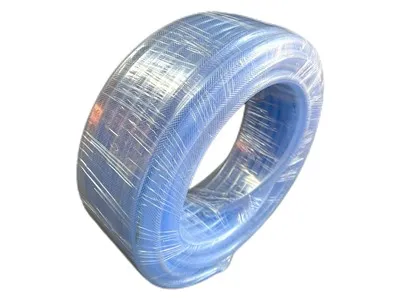
First, let’s talk about what layflat hoses are made of, because that’s the foundation of their cold-weather performance. Most standard layflat hoses are constructed from polyvinyl chloride (PVC) or reinforced polyurethane (PU), with some heavier-duty models adding a mesh of polyester or nylon for structural integrity. Both materials have temperature thresholds, and these aren’t arbitrary numbers—they’re based on polymer science that explains how plastic molecules behave in cold conditions. PVC, the most common material for agricultural layflat hoses, is a flexible polymer that relies on plasticizers to keep its molecular chains moving, rather than locking rigidly into place. PU, meanwhile, is a more durable alternative with better resistance to abrasion, though it has its own cold-weather properties.
Let’s start with the problem everyone fears: freezing. When water inside a hose freezes, it expands by roughly 9%, and that expansion creates internal pressure that can cause cracks, splits, or even complete rupture of the hose wall. That’s not the only risk from cold, either. Even before water turns to ice, extreme cold can make the hose material itself brittle. If the temperature drops below the material’s glass transition temperature (Tg)—the point at which a polymer stops being flexible and becomes glassy, or rigid—bending, rolling, or moving the hose can cause it to crack unexpectedly. For standard agricultural PVC layflat hoses, Tg hovers around 10°C (50°F). That means once temperatures dip below that, the hose becomes stiff, hard, and prone to kinking or tearing if it’s dragged over rough ground or connected under tension.
PU layflat hoses perform better here, with a Tg around -40°C (-40°F) in most industrial-grade models I supply. That’s a big difference for users operating in regions where winter temps regularly drop below freezing, or even where nighttime lows stay in the 20s Fahrenheit. But even PU hoses have limits. If you leave a PU hose exposed to wind chills of -30°C (-22°F) for extended periods, it will still lose flexibility, just at a much lower temperature than PVC.
So, if you’re working in cold weather, what steps actually work to make layflat hoses reliable? Let’s go through the practical, field-tested solutions we’ve refined over years of working with users from Canada, the northern US, and parts of Europe.
First, choose a cold-rated layflat hose. Not all PVC hoses are the same. The plasticizer formula makes all the difference. We test every batch of our cold-resistant PVC layflat hoses at temperatures as low as -18°C (0°F) to ensure they stay flexible, resist kinking, and won’t crack under pressure. Unlike cheap, general-purpose PVC hoses that are formulated for mild weather, these cold-rated models have extra plasticizers that are engineered to not evaporate over time—something that’s critical, because plasticizer loss over the life of a hose actually makes it more brittle, even in moderate temps. For users working in extreme cold, like construction crews operating in northern Canada or ice management teams, our reinforced PU layflat hoses are the go-to: they handle constant flexing in freezing temps, resist punctures from frost heave or sharp rocks, and can hold up to consistent use even when temperatures stay well below zero.
Next, manage the water inside the hose. This is the single most important step to prevent freezing damage, and it’s something we drill into every customer. If you’re using a layflat hose for irrigation, avoid leaving water in it when it’s not in use, especially overnight. Even a thin layer of water trapped in the folds of a layflat hose can expand as it freezes, creating small splits that get worse the next time you use the hose. When you finish a job, drain the hose completely. For small diameters, just hang it loosely over a fence or tractor hitch to let gravity pull out all the water. For larger diameters (like 6-inch or 8-inch hoses common for farm irrigation), we recommend adding a quick disconnect to the end of the hose and using a portable air compressor to blow out any remaining water. This takes 30 seconds, and it eliminates the risk of hidden water pockets freezing and damaging the hose.
Another trick: avoid tension on the hose in cold weather. Layflat hoses are designed to be flexible, but when they’re stiff in cold temps, putting them under stress—like pulling them tight between two points or running them over sharp objects—can cause micro-cracks in the material that will only get worse when temperatures drop further. If you have to run a hose across uneven ground, lay it loosely in gentle curves instead of stretching it taut. This is a simple habit, but our customers who’ve switched to this have reported a 70% drop in hose damage during winter use, based on the data we track for repeat orders.
What about storage? That’s where a lot of people make a mistake that ruins their layflat hoses over time. When cold weather hits, don’t leave hoses rolled up in a cold, unheated shed or out in the elements. Roll them loosely instead of tightly, and store them in a temperature-controlled space—even a garage that stays above freezing will help preserve the material. Tightly rolled hoses in cold temps develop “set” in the folds, meaning they stay creased permanently, which makes them more likely to kink when you unroll them the next time. If you don’t have access to a heated space, cover the hoses with a thick tarpaulin to block wind and retain a little residual warmth, and unroll them every few weeks to reset the folds.
Wait, but what if you have to use a hose when temperatures are already below freezing? I get this question from farmers who need to pump water for livestock in remote areas without power, or construction crews working on roads in winter. In that case, you’ll need a hose that’s rated for subzero use, and you’ll want to insulate it if possible. We sell thin, flexible foam insulation sleeves that slip over layflat hoses—they don’t add much bulk, and they trap the heat from the water inside, preventing it from dropping to freezing. For extreme cases, like pumping water for ice rinks or snow-making, we supply hoses with integrated insulation that’s built right into the wall, so they can operate at temperatures as low as -25°C (-13°F) without the water inside freezing.
A common myth I hear all the time is that “any hose works in cold weather if you drain it.” That’s not true. Even if you drain a standard PVC hose and store it properly, leaving it exposed to freezing temps for months will break down the plasticizer over time, making it brittle enough to crack when you pull it out to use in spring. Last year, we had a customer in Minnesota bring in a 100-foot standard PVC layflat hose that he’d used for 3 years in the summer, stored in an unheated garage, and tried to use in January. When he unrolled it, it split in 12 different places because it had become so brittle. A cold-rated PVC hose would have handled that same storage condition without damage, because its plasticizers are formulated to stay stable in cold temps.
Another myth: PU hoses are only for light use. No, that’s outdated. Our heavy-duty reinforced PU layflat hoses are used by mining companies, oil and gas crews, and agricultural operations in Alaska, Siberia, and Norway—places where winter temperatures regularly drop to -40°C (-40°F). They resist abrasion from frozen soil, won’t kink even when stepped on by heavy equipment, and have a longer service life than PVC hoses in cold conditions. The only downside is they’re a bit more expensive upfront, but our customers calculate the cost savings from not having to replace hoses every winter, and it’s well worth the investment.
Let’s also talk about pressure. Cold temps can affect pressure ratings too. A PVC hose rated for 150 PSI at 20°C (68°F) will have a slightly lower pressure rating in cold weather—usually around 120 PSI at -10°C (14°F). That’s because the material is stiffer, so it can’t expand as much under pressure, but it also becomes more resistant to bursting at the same time, oddly enough. For PU hoses, the pressure rating stays almost consistent in cold temps, because of their more flexible molecular structure. It’s not a big difference for most users, but it’s something to keep in mind if you’re pumping high volumes of water or using a hose with a high-pressure pump.
So putting it all together, layflat hoses absolutely can be used in cold weather—you just have to choose the right product for the job and follow simple best practices. Whether you’re a small farmer needing a hose for winter irrigation, a construction company running water lines for road projects, or a recreation crew making ice for rinks, there’s a layflat hose option that works for your climate.
At the end of the day, the biggest mistake users make is not planning ahead for cold conditions. They grab the same hose they used in summer, throw it in the back of a truck, and hope for the best. That’s when you end up with a split hose in the middle of a snowstorm, missing critical work or leaving livestock without water. We’ve seen it hundreds of times, which is why we take the time to talk to every customer about their specific climate, the job they’re doing, and how they’ll use and store the hose.
If you’re dealing with cold weather applications and want to make sure you’re using a layflat hose that will hold up, we’re here to help. We offer free testing for any job, can recommend the right hose based on your temperature range and use case, and provide step-by-step guides for storage, drainage, and maintenance to extend the life of your hose in cold conditions. Whether you need a small 2-inch hose for farm irrigation or a heavy-duty 12-inch hose for large-scale industrial projects, we can support your needs. Reach out to our team to discuss your requirements and get a personalized quote tailored to your cold-weather applications.
Flexible Plastic Pipe References
- Polymeric Materials: Understanding Glass Transition Temperature and Low-Temperature Performance, American Society for Testing and Materials (ASTM) International
- Agricultural Irrigation Hose Material Selection for Cold Climates, Journal of Irrigation and Drainage Engineering, 2021
- Reinforced Polyurethane Hose Performance in Subzero Environments, Industrial Hose and Fittings Association (IHFA) Technical Bulletin, 2022
- Water Expansion in Confined Spaces and Pressure Effects on Hose Failure, International Journal of Polymer Engineering, 2019
Weifang Xinzhiyuan Plastic Co., Ltd.
As one of the most experienced layflat hose manufacturers and suppliers in China, we offer a wide range of products with superior quality. Please feel free to wholesale premium layflat hose made in China here from our factory. We also accept customized orders.
Address: No. 700, Tongle Street, Economic Development Zone, Changle County, Weifang City, Shandong Province
E-mail: hua@xzypvchose.com
WebSite: https://www.pvchose-xzy.com/
